
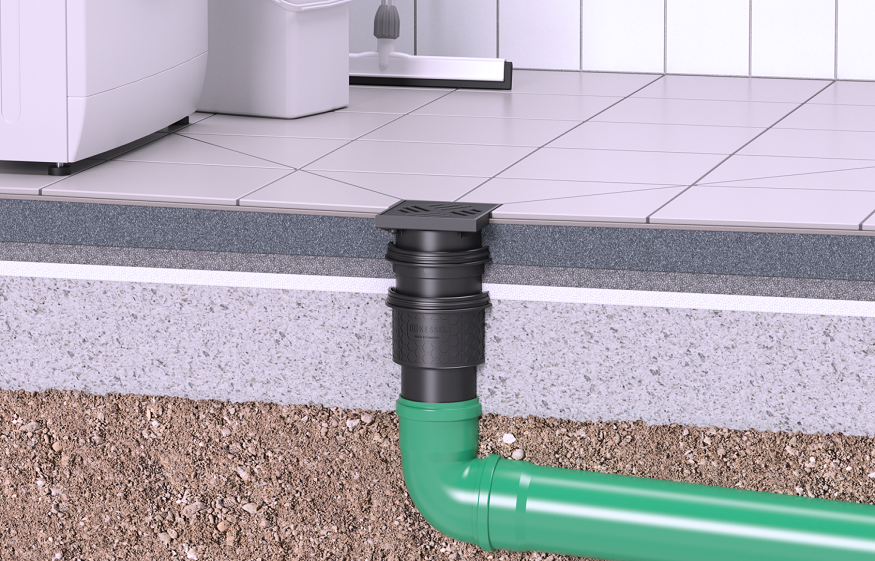
Wastewater is effectively moved away from sinks, showers, toilets, washing machines, and other fixtures by a home’s plumbing system. Water passes through the drainage system normally with little notice. However, the flow of water may alter significantly if an impediment starts to form within a pipe.
A clog may not necessarily result in an instantaneous, total obstruction. As dirt builds up along a pipe’s inside walls, several plumbing issues progressively arise. Homeowners may identify warning signals before significant disruptions to regular drainage occur by understanding what occurs throughout this process.
Debris Starts To Limit The Pipe
Materials building up within the drainage system is the first step in the majority of pipe blockages. Grease, food scraps, soap residue, and other trash may cause accumulation in kitchens. Hair, soap residue, and personal hygiene items may gather in bathroom pipes. Accidental entry of other materials into the plumbing system is another possibility.
Initially, the buildup could just make the pipe’s accessible area smaller. Homeowners may not notice anything out of the ordinary since water may still flow through. The aperture progressively becomes smaller as more stuff gets trapped.
When a clogged pipe Houston issue arises, homeowners may first notice that a shower or sink drains a little more slowly than normal. Although it might be simple to ignore, this early sign could mean that water is already running against resistance inside the drainage system.
Water Flow Begins To Decelerate
Water cannot pass through the impacted pipe at its usual speed as the barrier becomes bigger. Rather, it starts to gather behind the obstruction and then moves slowly through the remaining area.
Read More: Preventing Burst Pipes Through Early Frozen Pipe Repair Solutions
For this reason, one of the most obvious indicators of a growing blockage is poor draining. Shower water may start to collect around the drain, or a sink basin may stay full for a few seconds after the faucet is turned off.
It also matters where the obstruction is located. Only that specific drain may be impacted by a blockage near a single fixture. Multiple fixtures linked to the same stretch of plumbing may be impacted by a blockage further inside a common drainage line.
Change In Air Movement And Pressure
Water flow is not the only factor that affects drainage systems. Plumbing vents facilitate the smooth passage of wastewater via pipes by controlling air pressure. The usual interaction between water and air inside the drainage system may be disrupted by a growing obstruction.
Unusual noises may be produced by trapped air when water tries to get past a barrier. Sinks, toilets, and other drains may sometimes be heard bubbling or gurgling by homeowners.
These sounds may provide a crucial hint regarding what’s going on behind the apparent fittings. Repeated gurgling coupled with poor drainage warrants attention, even if an occasional sound does not always indicate a major issue.
Wastewater May Start To Reverse
The capacity of a pipe is restricted. Incoming wastewater may have nowhere to go if a blockage is bad enough. At that point, water might start flowing backward in the direction of apertures.
Wastewater may end up in unexpected locations as a consequence. When one plumbing fixture is used, for instance, water in another neighbouring drain may rise or bubble. Multiple parts of the property may be impacted by a significant obstruction in a bigger drainage pipe.
Because wastewater may include toxins, backups are especially problematic. When water starts to flow back through drains, the problem becomes more than a minor annoyance and needs to be fixed right away.
The Blockage Could Keep Expanding
Because current accumulation provides a surface where more material might accumulate, clogs may become bigger. Instead of flowing easily through the pipe, grease, hair, soap residue, food particles, and other items may adhere to the impediment.
Read More: The Impact of Hard Water on Your Plumbing System
As a result, a partly obstructed pipe may get more constricted. A brief improvement does not always indicate that the underlying accumulation has vanished. Slow draining and backups may ultimately recur if material stays within the pipe.
Conclusion
The consequences of a blocked pipe go beyond just water draining more slowly. Debris limits the amount of pipe space that is available, restricts water flow, alters air pressure, and finally causes wastewater to run backwards via linked fixtures.
Knowing this pattern makes it easier for homeowners to see that persistent drainage issues shouldn’t be dismissed as isolated annoyances. Restoring appropriate wastewater flow and maintaining the plumbing system’s overall efficiency may be achieved by addressing the obstruction’s cause.